
A successful house move depends on more than loading furniture into a van. There are belongings to organise, services to update, parking to check and important items to keep close on moving day.
This checklist covers the main tasks before, during and after a move. It is suitable for people moving within Bristol or Bath, elsewhere in the South West or to another part of the UK. You can also explore our guide to removal areas across Bristol, Bath and the South West.
Every move is different. Use this guide as a starting point and add tasks that are specific to your property, tenancy, purchase, family or circumstances.
Six to eight weeks before moving
Confirm what you are moving
Start with an inventory of furniture, appliances, boxes and other belongings. Remember to check less visible areas such as:
- Lofts and attics;
- Garages and sheds;
- Storage cupboards;
- Gardens and balconies;
- External storage units;
- Items kept with relatives or friends.
Your inventory does not need to be complicated. A clear list, supported by photographs or a video, will help the removals team understand the volume.
Decide what will not be moved
Separate belongings into categories such as keep, sell, donate and dispose of. Reducing the volume before requesting the final quote can make the move easier to plan.
If you require a clearance service, take clear photographs of the items. Our clearance and complementary services are quoted according to volume, weight, access, number of movers, stairs, parking, dismantling and whether the items are inside or ready for collection outside.
Choose the right moving service
A Man with a Van may be suitable for single items, student moves, storage collections and smaller house or flat moves. A more comprehensive House Removal can be planned for larger properties or moves involving packing, a larger team or furniture dismantling. If you are unsure, compare the options in our Man with a Van vs House Removals guide.
Request a quote
Before requesting a removal quote, prepare the following information:
- Collection and delivery addresses or postcodes;
- Your preferred moving date;
- A complete or approximate inventory;
- Property type and floor;
- Details of stairs and lifts;
- Parking and access information;
- Large, heavy or fragile items;
- Packing requirements;
- Furniture that may need to be dismantled.
For a larger move, the removals company may request photographs or a video of the items and properties.
Four weeks before moving
Review access and parking
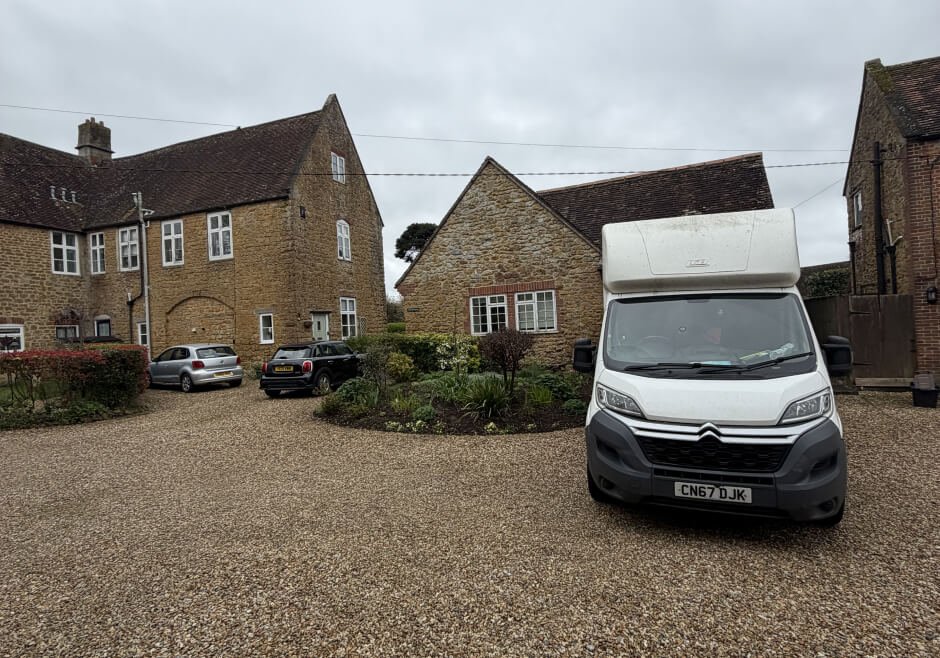
Check how close a removal van can park to each property. Look for resident parking bays, limited waiting areas, yellow lines, loading restrictions, narrow roads, gates and height restrictions.
If your move involves Bristol, consult Bristol City Council’s information about parking suspensions, dispensations and coning requests. For a move in Bath or the surrounding authority area, Bath and North East Somerset Council provides guidance about parking bay suspensions.
Do not assume that a removals vehicle can use any available space. Contact the relevant council if you are unsure whether permission or a suspension is required.
Arrange packing
Decide whether you will pack everything yourself or require professional help. Through our professional packing services, Vinny Van Man Removals can provide:
- Full packing;
- Partial packing;
- Fragile-item packing;
- Kitchen packing;
- Packing materials when required.
If you are packing yourself, calculate how many boxes and materials you will need. Avoid placing too much weight into one large box. Books and similarly heavy belongings are usually easier to handle when divided between smaller boxes.
Create a moving folder
Keep key information together, either physically or digitally:
- Removal quote and contact details;
- Moving date and approximate schedule;
- Property documents;
- Inventory and photographs;
- Parking information;
- Utility account details;
- Contact details for agents, landlords or solicitors where relevant.
Plan for children and pets
Moving day involves open doors, people carrying furniture and frequent movement between the property and van. Consider whether children or pets can stay safely with someone else during the busiest part of the move.
Two to three weeks before moving
Begin packing non-essential items
Start with belongings you are unlikely to need before the move, including seasonal items, books, decorations and spare-room contents.
Label each box with:
- The destination room;
- A brief description of the contents;
- Whether the contents are fragile;
- Any relevant handling instruction.
Clear labels make unloading more organised and reduce the need to move boxes again after delivery.
Check large furniture
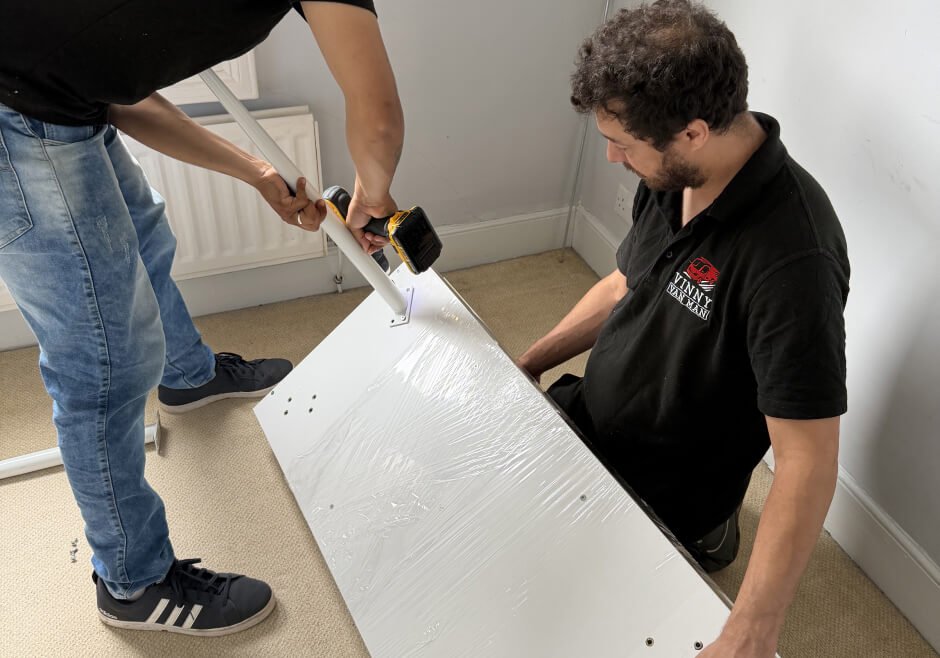
Measure large furniture and compare it with doors, staircases, corridors and lifts at both properties. Identify anything that may need to be dismantled.
Do not dismantle an item unless you know how it will be reassembled. Keep fittings in a labelled bag and attach the bag securely or store it with essential moving items.
Prepare your change-of-address list
The organisations you need to contact will depend on your circumstances. Your list may include:
- Local council and Council Tax;
- Electricity, gas and water providers;
- Broadband and telephone providers;
- Banks and credit providers;
- Insurance providers;
- Employer or business contacts;
- Schools, colleges or childcare providers;
- GP, dentist and other healthcare providers;
- Subscription and delivery services;
- Family and friends.
If you drive, GOV.UK states that you must update the address on your full or provisional driving licence after moving. Depending on what applies to you, your vehicle log book, vehicle tax Direct Debit and motor insurance details may also need to be updated.
You can also update your electoral registration using the official GOV.UK register-to-vote service.
Consider mail redirection
Royal Mail offers a paid redirection service for personal and business mail. Its official guidance recommends applying in advance because processing time is required.
Redirection does not replace updating your address with individual organisations, but it can help prevent post from continuing to arrive at the old property during the transition.
One week before moving
Confirm the details with the removals team
Check the date, collection address, delivery address and agreed service. Inform the company if anything material has changed, such as:
- A significant increase in the number of boxes;
- Additional furniture or appliances;
- Changes to parking or access;
- A lift becoming unavailable;
- New dismantling or packing requirements;
- A change to the property or moving date.
A quote is based on the information provided. Early notice gives the team an opportunity to reconsider the vehicle, movers and estimated time.
Finish most of the packing
Leave out only what you will use during the final days. Check that fragile belongings have suitable protection and that every box can be lifted safely.
Prepare an essentials box or bag
Keep essentials with you instead of placing them deep inside the removal van. Your personal list may include:
- Keys;
- Identification and important documents;
- Phone and chargers;
- Medication;
- Basic toiletries;
- Drinking water and snacks;
- Kettle, mugs and basic kitchen items;
- Cleaning supplies;
- Toilet paper;
- A change of clothes;
- Items needed by children or pets.
Check your Council Tax responsibilities
If you are moving into, out of or within Bristol, Bristol City Council provides an online service for updating Council Tax details.
Bath and North East Somerset Council also provides an official moving-home form for people moving into, out of or within its area.
Use the service provided by the council responsible for your old and new addresses.
The day before moving
- Complete the remaining packing;
- Charge your phone;
- Confirm that keys will be available;
- Keep documents and valuables separate;
- Defrost and prepare appliances when required by their manufacturer;
- Check cupboards, lofts, sheds and outdoor areas;
- Make sure the agreed parking arrangements are ready;
- Keep walkways clear for the movers;
- Set aside anything that must not be loaded.
Clearly identify belongings that are staying at the property. If several people are involved, make sure everyone understands what should and should not be moved.
On moving day: before loading
Meet the team and review the plan
Show the movers around the property and point out:
- Fragile or unusually heavy items;
- Furniture requiring dismantling;
- Items that are not being moved;
- Any access concerns;
- The location of the destination keys;
- Important boxes that should remain accessible.
Protect personal information and valuables
Carry passports, financial documents, jewellery, medication and other irreplaceable personal items yourself wherever appropriate.
Take final meter readings
Record final meter readings at the old property and initial readings at the new one where applicable. Photographs can provide a useful record.
During loading
Keep entrances and carrying routes clear. Avoid adding unplanned boxes or loose items at the last moment without telling the team.
Vinny Van Man Removals uses moving blankets, straps, trolleys and protective covers for mattresses, sofas and televisions. The exact equipment required will depend on the belongings and the job.
If dismantling or packing was agreed, confirm which items are included before the relevant work begins.
Before leaving the old property
Complete a final walkthrough and check:
- Every room;
- Built-in cupboards;
- Loft or attic space;
- Garage and shed;
- Garden and outdoor storage;
- Behind doors;
- Appliances and utility areas;
- Windows and external doors;
- Any keys that must be handed over.
At the new property
Check access before unloading
Make sure the van can use the planned parking location and that entrances are accessible. Remove hazards from paths, corridors and staircases.
Direct boxes to the right rooms
Clear labels make this stage much easier. If possible, have one person available to direct the team while another checks the property.
Check large furniture locations
Know where major pieces should be placed before they are carried inside. Moving heavy furniture again after unloading creates unnecessary work.
Review the delivery
Once unloading is complete, check the van and the main rooms. If you have concerns about an item or the service, raise them with the team promptly.
During the first week after moving
- Finish updating organisations with your new address;
- Confirm utility accounts and meter readings;
- Update your driving and vehicle records where applicable;
- Update your electoral registration;
- Confirm Council Tax arrangements;
- Check smoke and carbon monoxide alarms where applicable;
- Unpack essential rooms first;
- Flatten or store reusable boxes safely;
- Report any maintenance issues to the appropriate person.
Quick printable moving checklist
Before the move
- Prepare an inventory;
- Declutter and separate unwanted items;
- Book the moving service;
- Confirm parking and access;
- Arrange packing and materials;
- Label every box;
- Measure large furniture;
- Prepare address updates;
- Arrange Council Tax and utilities;
- Prepare an essentials bag.
On moving day
- Review the plan with the movers;
- Keep valuables and documents with you;
- Record meter readings;
- Keep entrances clear;
- Complete a final property check;
- Direct boxes to the correct rooms;
- Check the property and delivery.
After the move
- Confirm utilities and Council Tax;
- Complete address updates;
- Update driving and vehicle records;
- Update electoral registration;
- Unpack essential rooms;
- Deal with packing materials safely.
Plan your move with Vinny Van Man Removals
We provide Man with a Van, House Removals, packing services and long-distance removals across Bristol, Bath, the South West and throughout the UK.
Send us your addresses, moving date, inventory and access details for a tailored, no-obligation quote. If you would like to understand how the price is calculated first, read our guide to removal costs in Bristol and Bath.